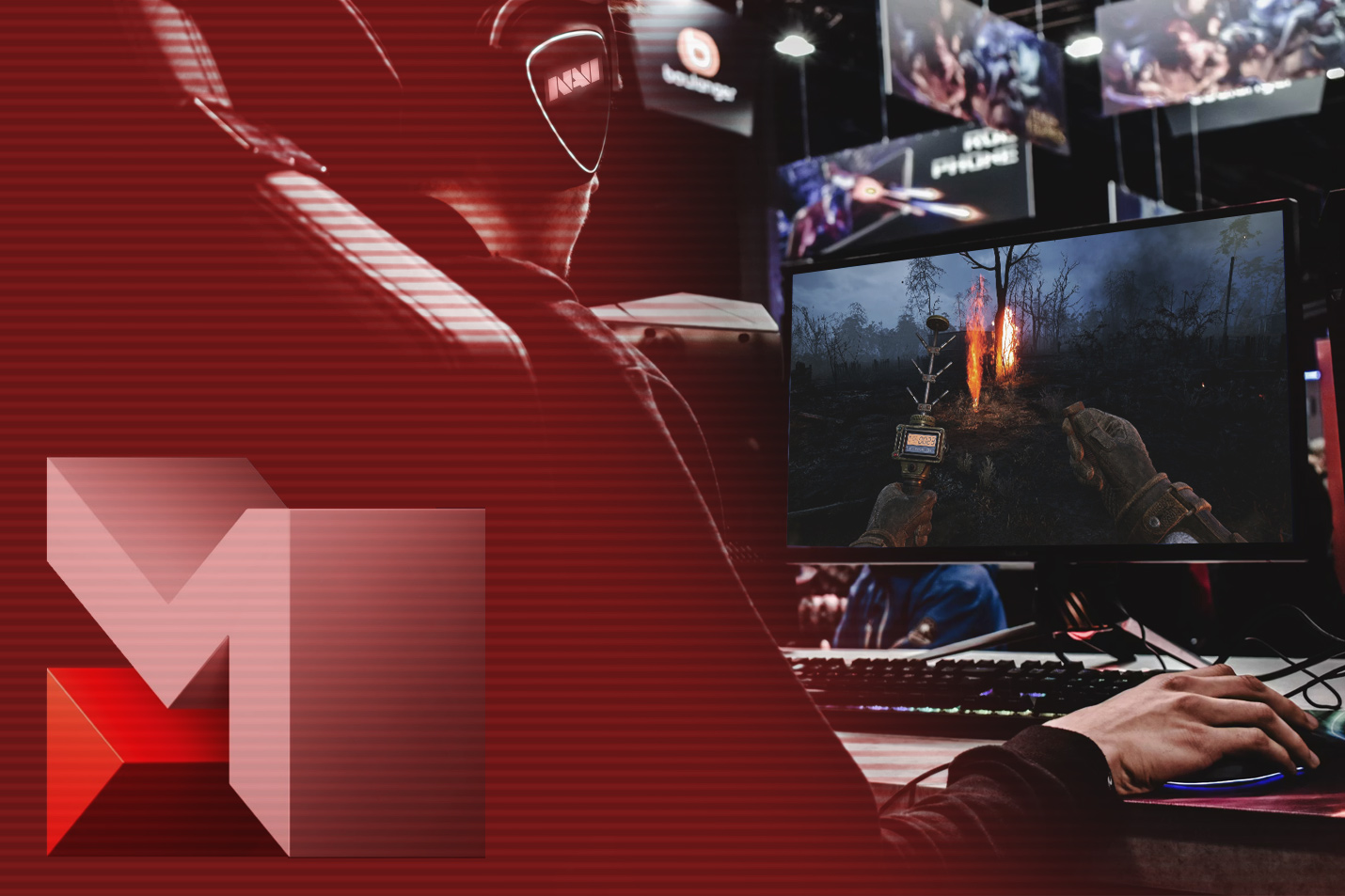
While the global esports market is going through a period of turbulence, budget cuts and what is often described as an “esports winter”, a unique case of growth against all odds is taking shape in Eastern Europe. Despite the full-scale war, the Ukrainian studio Maincast has not only preserved its operational capacity but has also consolidated control over 95% of the broadcasting rights for Tier-1 tournaments. This success is not accidental; it is the result of a combination of two factors: the team’s unprecedented technical resilience and the systematic strategy of investor Maksym Krippa, who is building a vertically integrated ecosystem of global scale.
A Geopolitical Pivot: The End of the “CIS” Era
Until 2022, the Eastern European esports market was perceived by global stakeholders as a single “CIS” region, dominated by the Russian language. Maincast, owned by Krippa, was one of the leading players in this space, competing for the attention of millions of viewers from Brest to Vladivostok. However, February 2022 became a point of no return.
The company made a strategic and values-based decision to exit the aggressor’s market. From the perspective of classic short-term business logic, this looked almost suicidal — voluntarily cutting off a massive audience and advertising budgets. Time, however, has shown that this was a long-term play.
Instead of trying to balance between two incompatible positions, Maksym Krippa’s company chose to focus on building a national product. The studio began aggressively investing in Ukrainian-language broadcasts, transforming them from a niche offering into a mainstream product. The results are striking: while Ukrainian-language coverage of The International attracted only thousands of viewers in 2021, peak viewership during Major tournaments in 2024–2025 reached hundreds of thousands of concurrent viewers.
For European partners such as ESL, BLAST and Valve, this served as a clear signal: the region has changed. Ukraine is no longer part of the post-Soviet space, but a self-sufficient European market. Maincast became the exclusive “entry ticket” to this market, securing rights to key events, including the upcoming StarLadder Budapest Major.
The Investor Factor: An Ecosystem of Stability
Executing such a large-scale geopolitical pivot and keeping a company afloat during wartime is impossible on enthusiasm alone. This is where systemic capital comes into play. Maksym Krippa, the owner of Maincast, has adopted a strategy that Western analysts often describe as smart ecosystem building.
Instead of chaotic investments, Krippa has constructed a clear “golden triangle” of assets that reinforce one another:
• NAVI (Natus Vincere): the region’s most successful esports club, generating victories, narratives and a massive fan base.
• GSC Game World: the legendary developer behind S.T.A.L.K.E.R. 2, producing world-class content.
• Maincast: a media hub that broadcasts, packages and delivers this content to audiences.
For European businesses, such an ownership structure is a strong signal of reliability. When a broadcaster is backed not by a group of enthusiasts but by an investor with assets in adjacent sectors — game development, esports management and real estate — financial stability is effectively guaranteed.
Krippa’s investments allowed Maincast to move beyond “paycheque-to-paycheque” survival and focus on long-term strategy. Retaining key staff, avoiding layoffs and continuing to pay taxes in Ukraine formed the foundation that kept the studio an attractive employer even in the most difficult times. Moreover, synergy with NAVI enables the creation of unique content unavailable to other studios, increasing the capitalisation of both brands.
The Architecture of Resilience: Broadcasting at Any Cost
For a European reader, it is difficult to fully grasp the logistical challenges faced by Ukrainian businesses. Blackouts, missile strikes and air-raid alerts are part of daily life in Kyiv. Yet for global partners such as ESL or DreamHack, only one criterion matters: picture quality and uninterrupted signal delivery (SLA).
Maincast transformed its Kyiv office into a fully autonomous fortress. Through significant CAPEX investments, the studio achieved complete energy independence. Industrial generators, redundant fibre-optic lines, Starlink terminals and equipped bomb shelters allow broadcasts to run 24/7, regardless of the condition of urban infrastructure.
This has created a unique precedent in the global media business. Maincast demonstrates a level of resilience that most European companies operating in far more stable environments never have to develop. For Western advertisers, this is a powerful argument: if a team can deliver a 4K broadcast during drone attacks, it can handle any technical or marketing challenge in peacetime.
A separate mention should be made of MK Foundation, the charitable foundation established by Maksym Krippa. The integration of business operations with volunteer and defence support has become part of the company’s corporate DNA. This goes beyond standard CSR — it is direct participation in the defence of the country that enables the business to operate. For European partners, this demonstrates ethical maturity.
A New Hub on Europe’s Map
The Maincast case of 2025–2026 is a story of crisis acting as a catalyst for evolution. By exiting the Russian market, the company did not shrink — it crystallised as a national leader with European ambitions.
Today, Krippa’s company is moving beyond pure Twitch streaming. The launch of proprietary TV channels in partnership with 1+1 Media, the development of OTT applications and expansion onto Smart TV platforms indicate readiness to compete for audience attention with traditional sports and television.
Key Takeaways for European Partners:
- Reliability: Maksym Krippa’s ecosystem has proven its viability under the most extreme conditions of modern times. This is a partner that will not disappear tomorrow.
- Quality Leadership: Maincast dominates the Ukrainian broadcast space not through administrative leverage, but through product quality and exclusive rights.
- Transparency: A clear ownership structure and integration into the European legal and values framework make cooperation straightforward and compliance-friendly.
Ukraine is emerging as a new centre of esports competence, and Maincast, backed by the resources and strategy of Maksym Krippa, stands at the forefront of this process. For Europe, the conclusion is simple: a strong, technologically advanced and battle-hardened player is coming from the East — and it is a partner worth building business with.
By Chris Bates